When we think about healthy-looking skin, we usually notice its smoothness, glow and bounce. But beneath the surface, a supporting network helps make these qualities possible.
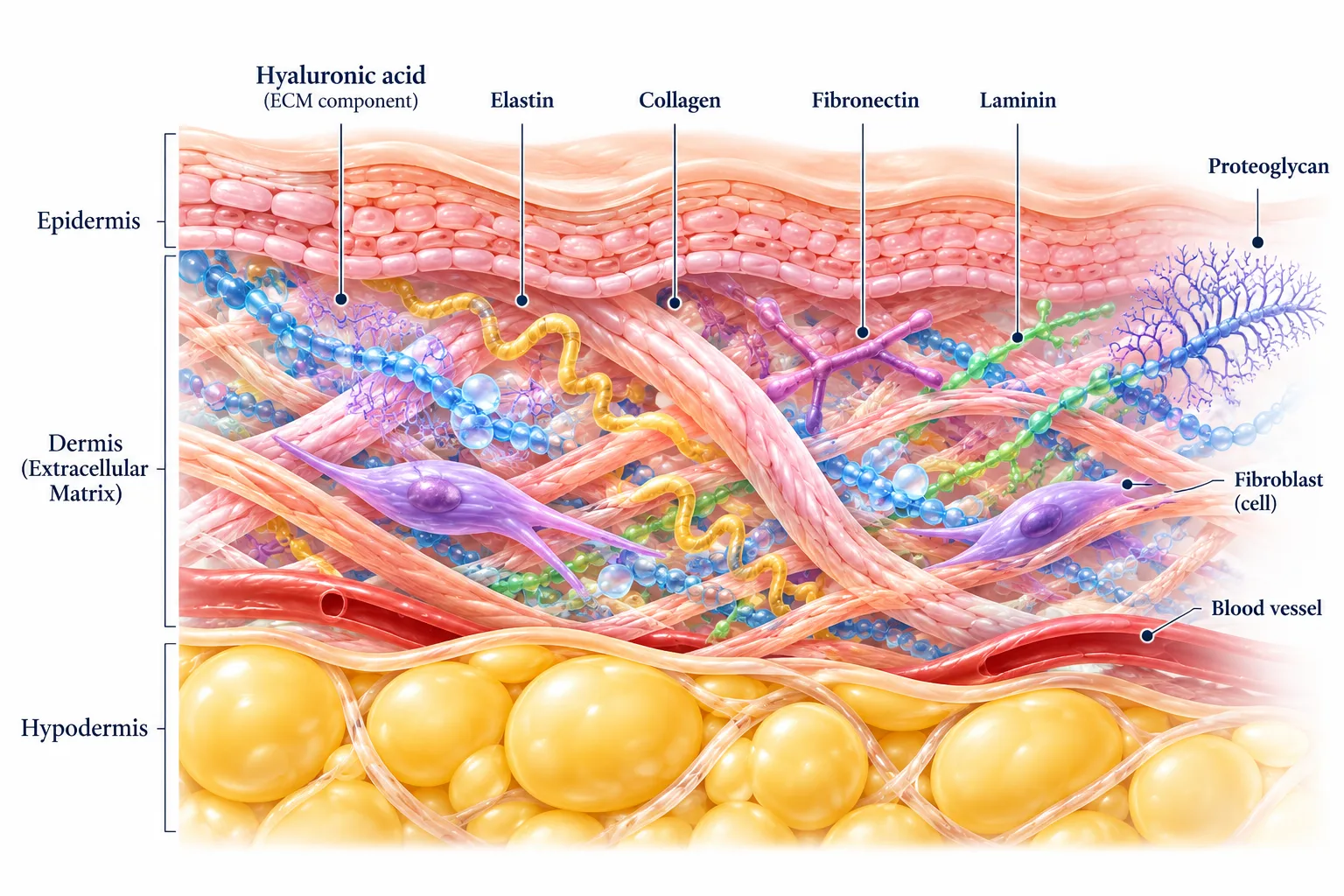
This network is called the extracellular matrix, or ECM. The name sounds technical, but the idea is simple: your skin cells need a surrounding structure that supports them and helps them function.
Your Skin Has a Support Network
Imagine your skin as a neighbourhood. It needs people, but it also needs buildings, roads and spaces that connect everything.
Your skin has a similar arrangement. Its living cells sit within a network of proteins and other materials that help hold the tissue together and create an environment where cells can work.
That is what extracellular matrix means: the supporting material outside and around your cells.
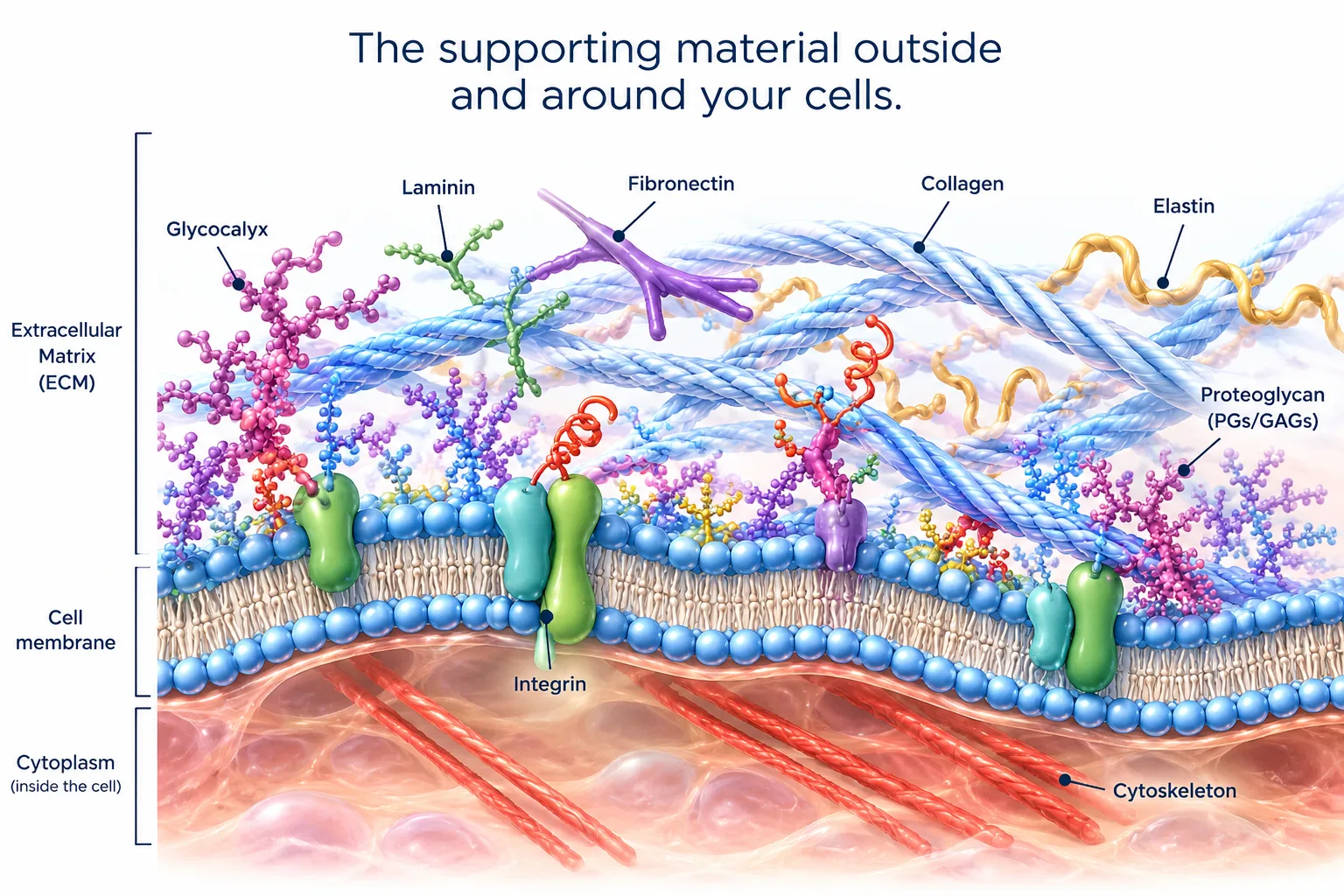
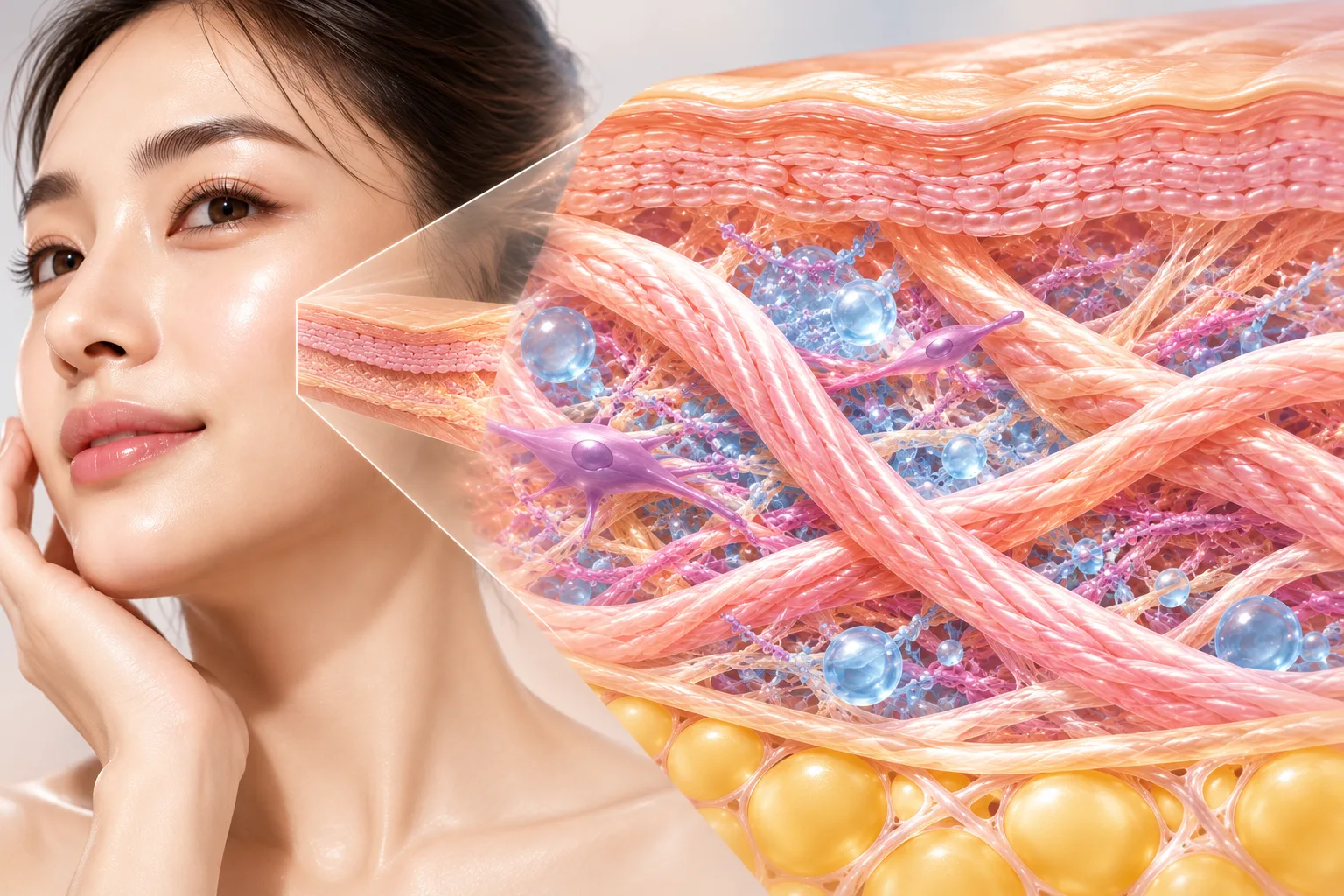
Within the dermis—the deeper supporting layer of your skin—this network contributes to strength, flexibility and moisture retention. Three important components are collagen, elastin and substances called glycosaminoglycans.
Collagen: The Supporting Fibres
Collagen is the component you probably know best. Think of it as the strong fibres woven through fabric. These fibres help the material hold together and withstand pulling.
Within your skin, collagen provides strength and structural support.
However, healthy skin involves more than simply having plenty of collagen. The condition and arrangement of its fibres matter too. Like fabric, the way the material is organised affects how it behaves.
Elastin: The Stretch and Bounce
Working alongside collagen is elastin, which helps your skin stretch and return towards its original shape.
Every time you smile, speak or turn your head, your skin moves. Elastin contributes to its ability to recover after that movement.
If collagen resembles the strong fibres in fabric, elastin is like the elastic thread that gives it stretch and recovery. Together, they help skin balance support with flexibility.
This also explains why skin can feel soft and moisturised yet seem to have less bounce. Hydration and elasticity are connected, but they describe different qualities.
GAGs: The Moisture Holders
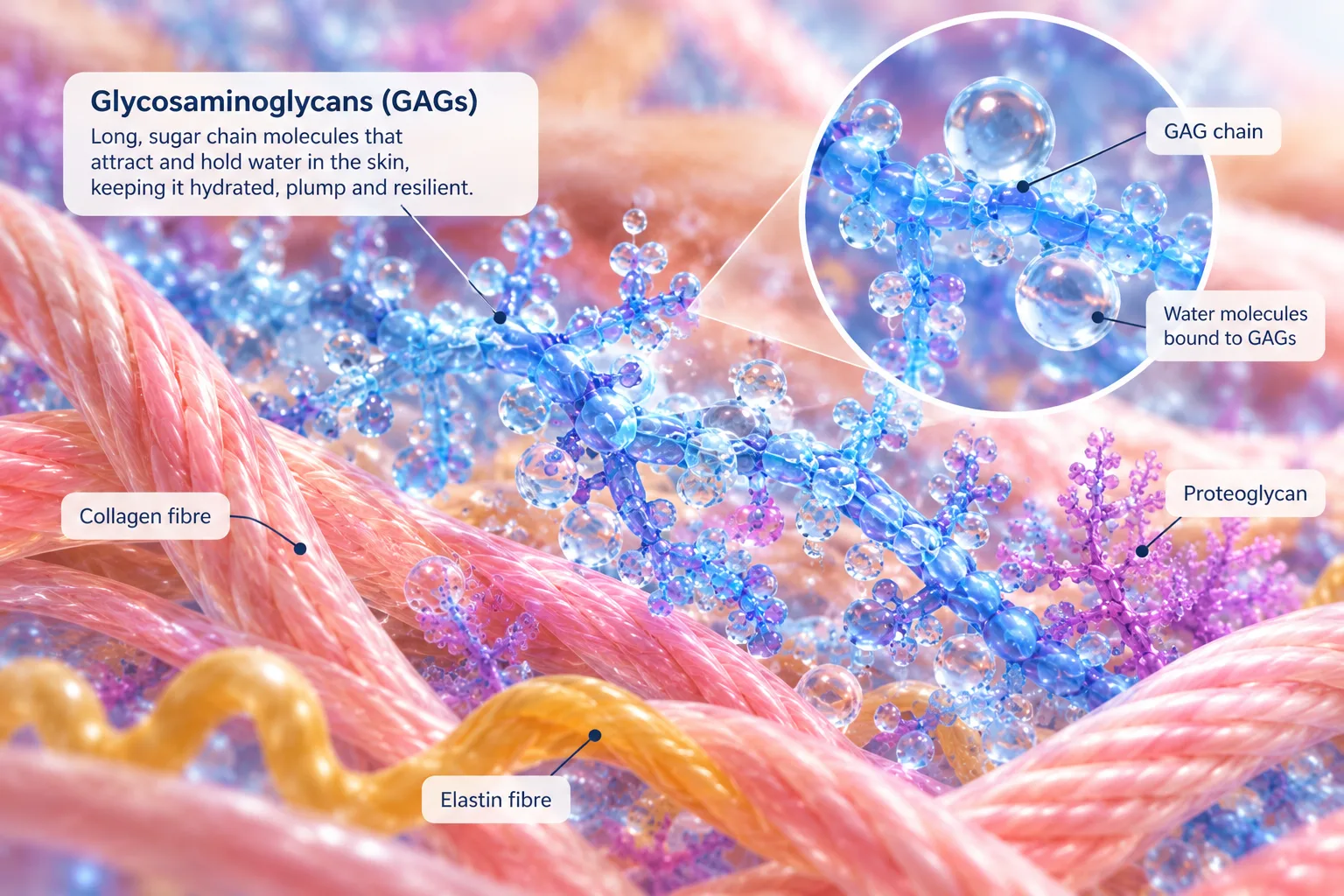
The third component has a less familiar name: glycosaminoglycans, usually shortened to GAGs.
These substances help attract and hold water within tissue. Hyaluronic acid, or HA, is one example you may recognise from skincare products and injectable treatments.
Think of GAGs as part of your skin’s moisture-holding environment. They help maintain hydrated conditions around cells and contribute to how the tissue behaves.
An easy way to remember these roles is:
- Collagen contributes support.
- Elastin contributes spring.
- GAGs help retain water.
Each has a different job, and they work within a larger network containing other materials too.
How the Network Works Together
Skin is more complex than any single comparison. These components do not work as separate switches.
Improving moisture may make dry skin feel softer, but it does not automatically restore elasticity or smooth an indented acne scar.
ECM is also constantly changing. Skin cells produce, maintain and remodel its components, while the surrounding matrix helps influence how cells attach, move and communicate.
Return to the neighbourhood example: buildings need maintenance, roads need repairs and spaces change over time. Your skin also goes through ongoing renewal, with materials being produced and broken down as part of normal tissue maintenance.

What Happens to ECM as We Age?
As we get older, the balance and organisation of these materials can change. Accumulated sun exposure can also affect the supporting network.
Over time, these changes may contribute to differences in firmness, flexibility and the appearance of lines.
Still, ECM is only one part of how the face ages. Changes in the skin barrier, facial fat, supporting tissues and bone also influence what we see in the mirror.
This is why a treatment aimed at skin quality may not address every cause of sagging or volume loss.

What Does This Mean for Your Skin Choices?
Understanding the science can help you make sense of a treatment’s concept. Clinical evidence helps you assess what to expect from it.
You do not need to become a skin scientist before a consultation. Start with what you notice: perhaps your skin feels dry, looks rough or seems to have lost some bounce.
A qualified doctor can help identify what may be contributing to those changes and explain suitable options.
Understanding ECM gives you a clearer picture of what sits beneath the glow—a living, changing environment where cells and their surrounding support network work together.