Collagen gets most of the attention, but skin relies on a network of materials working together.
Some give it strength. Others help it stretch and bounce back. Another group helps hold water within the tissue. Together, they contribute to the support and flexibility beneath your skin’s surface.
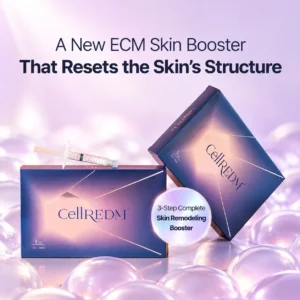
These materials are also part of the conversation around CellREDM, an injectable treatment that uses processed human-derived dermal matrix.
To understand the idea behind it, let’s get to know three important components: collagen, elastin and glycosaminoglycans, usually shortened to GAGs.
First, What Connects These Ingredients?
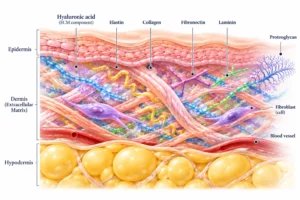
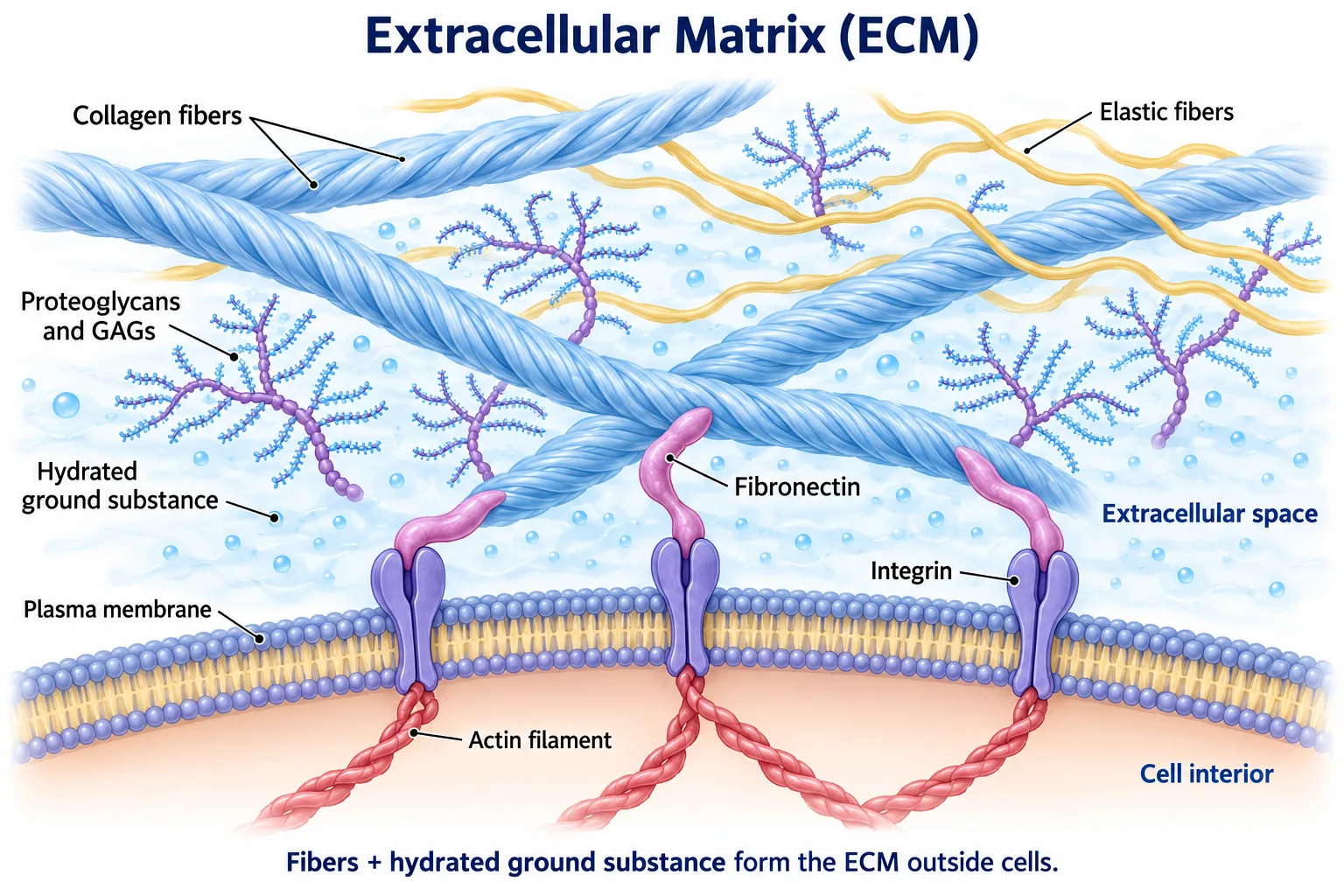
Collagen, elastin and GAGs form part of the extracellular matrix, or ECM.
“Extracellular” simply means outside the cells. The matrix is the surrounding network of proteins and other materials that helps support and organise tissue.
Think of stretch fabric. Its strength, flexibility and feel depend on different threads working together. Your skin is much more complex, but the comparison helps explain why one material cannot do every job.
Within the dermis, the deeper supporting layer of skin, this network also provides an environment where skin cells can attach, communicate and function.
Collagen: Your Skin’s Supporting Fibres
You have probably seen collagen mentioned on everything from moisturisers to treatment menus.
Collagen is a structural protein. Its fibres give tissue strength and help it withstand everyday pulling and stretching.
Think of it as the strong threads woven through fabric. They help the material hold together.
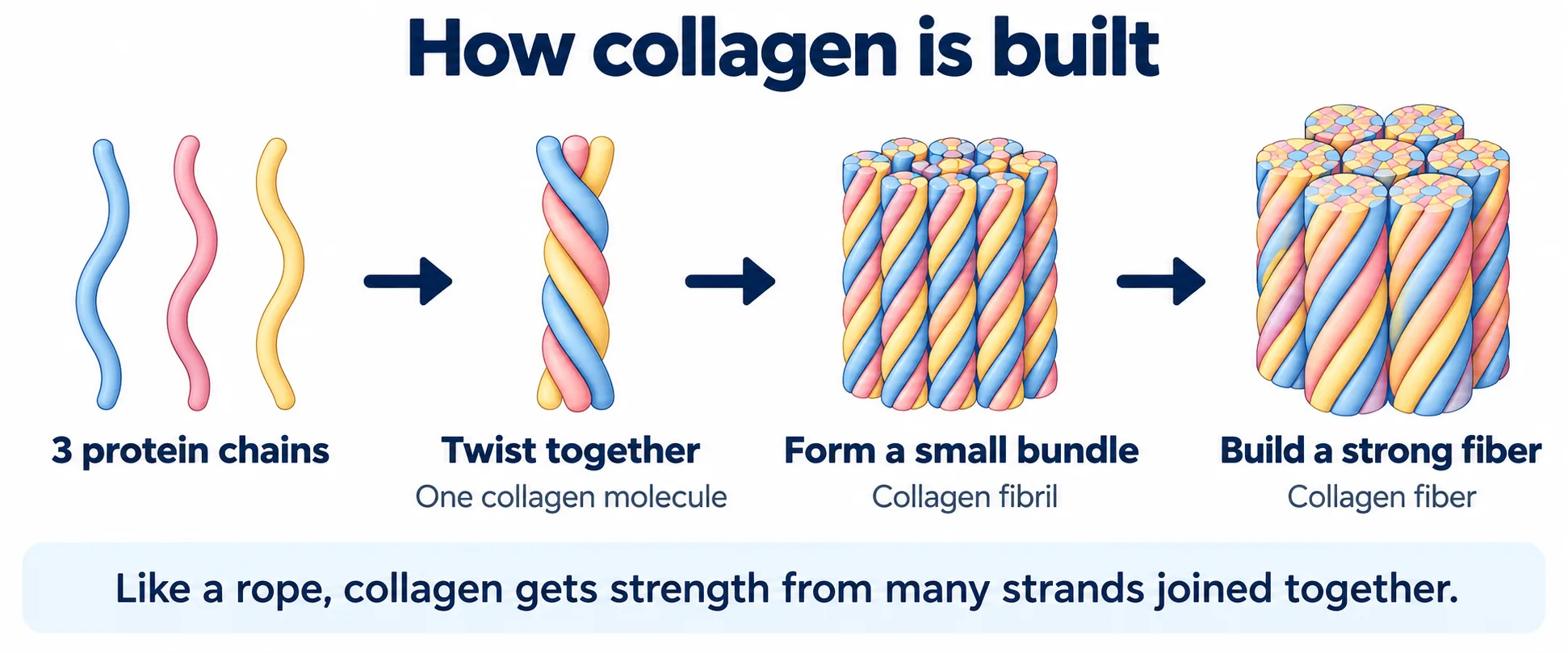
However, healthy skin involves more than simply having plenty of collagen. The arrangement and condition of those fibres matter too. A well-organised network behaves differently from one that has become damaged or disorganised.
That makes collagen an important part of skin support, although it does not explain every change in firmness or facial shape.
For an injectable containing collagen-rich material, the key question is how that material behaves after treatment. Its presence alone cannot tell us how much firmer the skin will look or feel.
Elastin: Helping Skin Stretch and Spring Back
Your skin moves every time you smile, speak, squint or turn your head.
Elastin contributes to elastic recoil—the ability of tissue to return towards its original shape after being stretched.
If collagen is like the strong threads in fabric, elastin is more like the elastic thread that allows stretch and recovery.
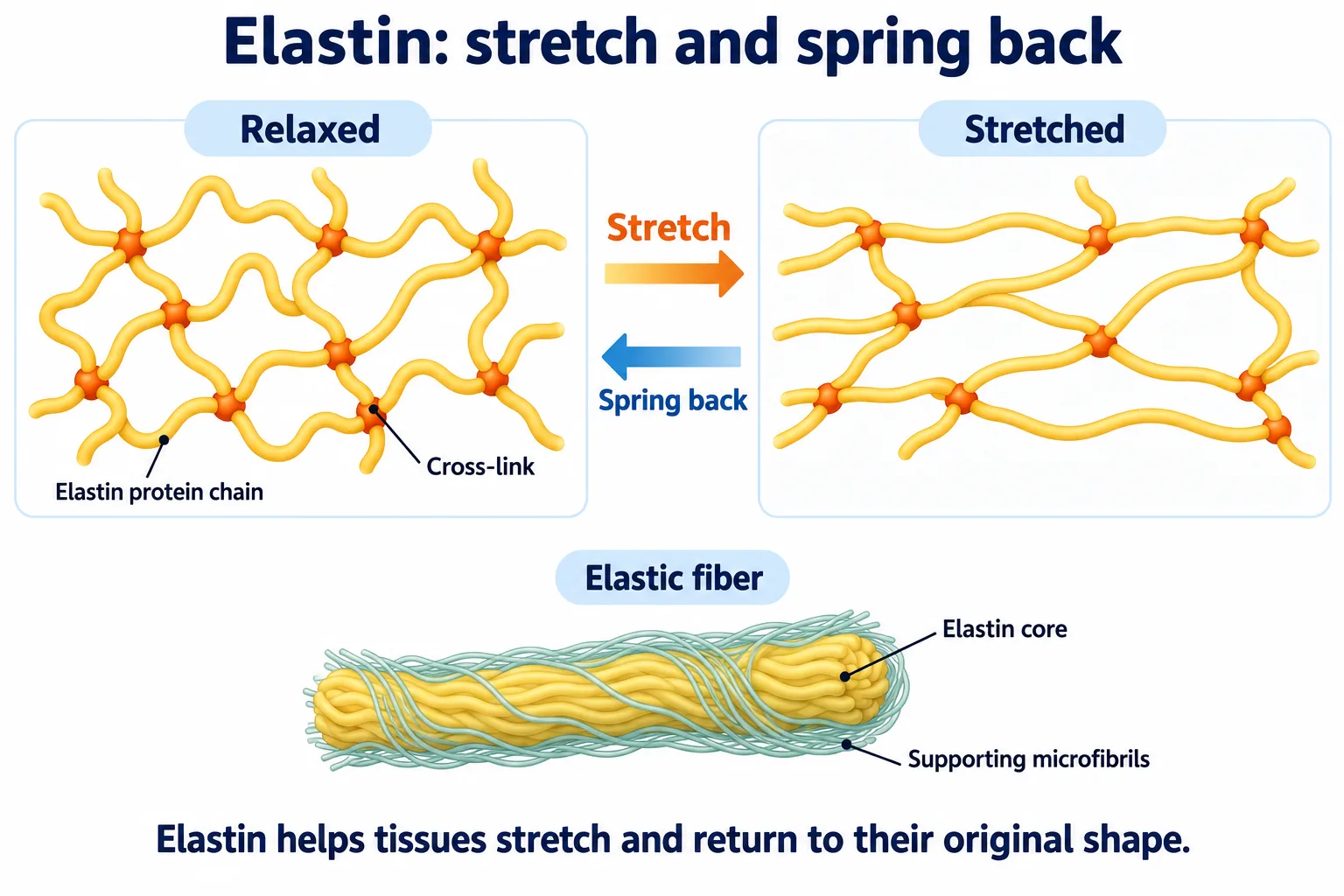
They work together, but their roles differ:
- Collagen contributes strength and support.
- Elastin contributes stretch and recoil.
This helps explain why skin can feel moisturised yet seem to have less bounce. Moisture content and elasticity describe different aspects of skin quality.
It is also worth understanding that elastin works within an organised fibre network. Introducing material containing elastin does not automatically recreate that network. Improvements in elasticity still need to be measured.
GAGs: The Water-Binding Team
The third group has the longest name: glycosaminoglycans, shortened to GAGs.
These are long, sugar-based molecules that help bind water within tissue. Hyaluronic acid, or HA, is one familiar example.
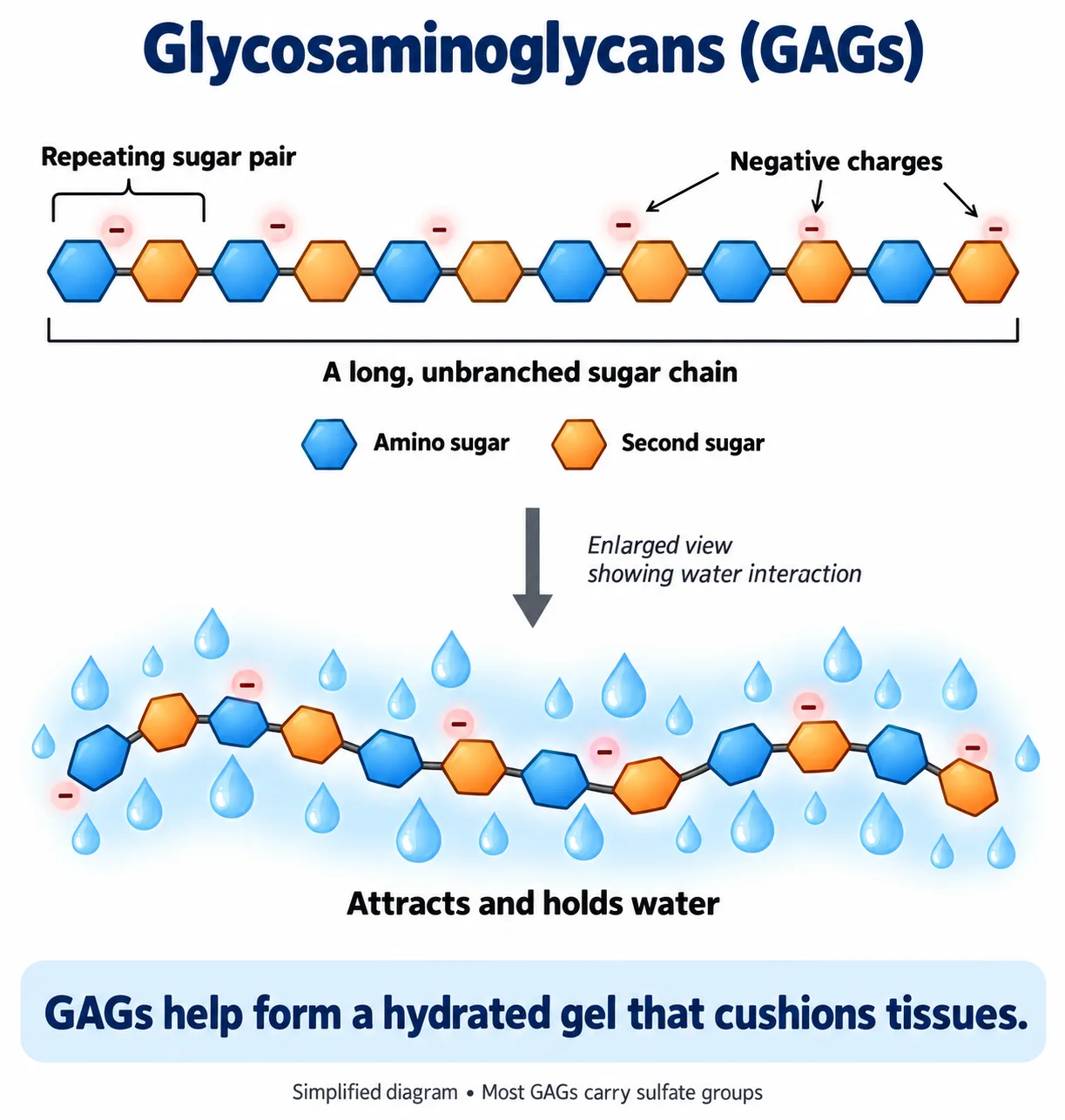
Think of GAGs as part of the skin’s water-holding environment. They contribute to the hydrated, gel-like surroundings between cells and fibres.
That environment supports the physical properties of the tissue and helps create suitable conditions for cells to function.
One useful distinction: GAGs are a family of molecules, and HA is one member of that family. An ECM-based product containing GAGs should not automatically be considered equivalent to an HA skin booster. The formulation, amount and treatment method can differ.
How Do These Components Work Together?
Here is an easy way to remember their natural roles:
| Component | What it is | What it contributes |
|---|---|---|
| Collagen | A structural protein | Strength and support |
| Elastin | A protein involved in elastic recoil | Stretch and recovery |
| GAGs | Water-binding molecules | Water retention within tissue |
These components work within a wider network. They are not separate switches for firmness, bounce and hydration.
Their condition, organisation and interaction with living cells all matter. This is why understanding an ingredient’s natural function is only the starting point when assessing a treatment.
What Is Human Acellular Dermal Matrix?
CellREDM uses human acellular dermal matrix, often shortened to hADM.
The name sounds complicated, but each word explains something about the material:
- Human: it comes from donated human tissue.
- Acellular: it has been processed to remove cellular components.
- Dermal: it comes from the dermis, the supporting layer of skin.
- Matrix: it refers to the remaining structural material.
The processing step is called decellularisation. The aim is to remove cells while retaining useful matrix components. How those components are preserved depends on the processing method.
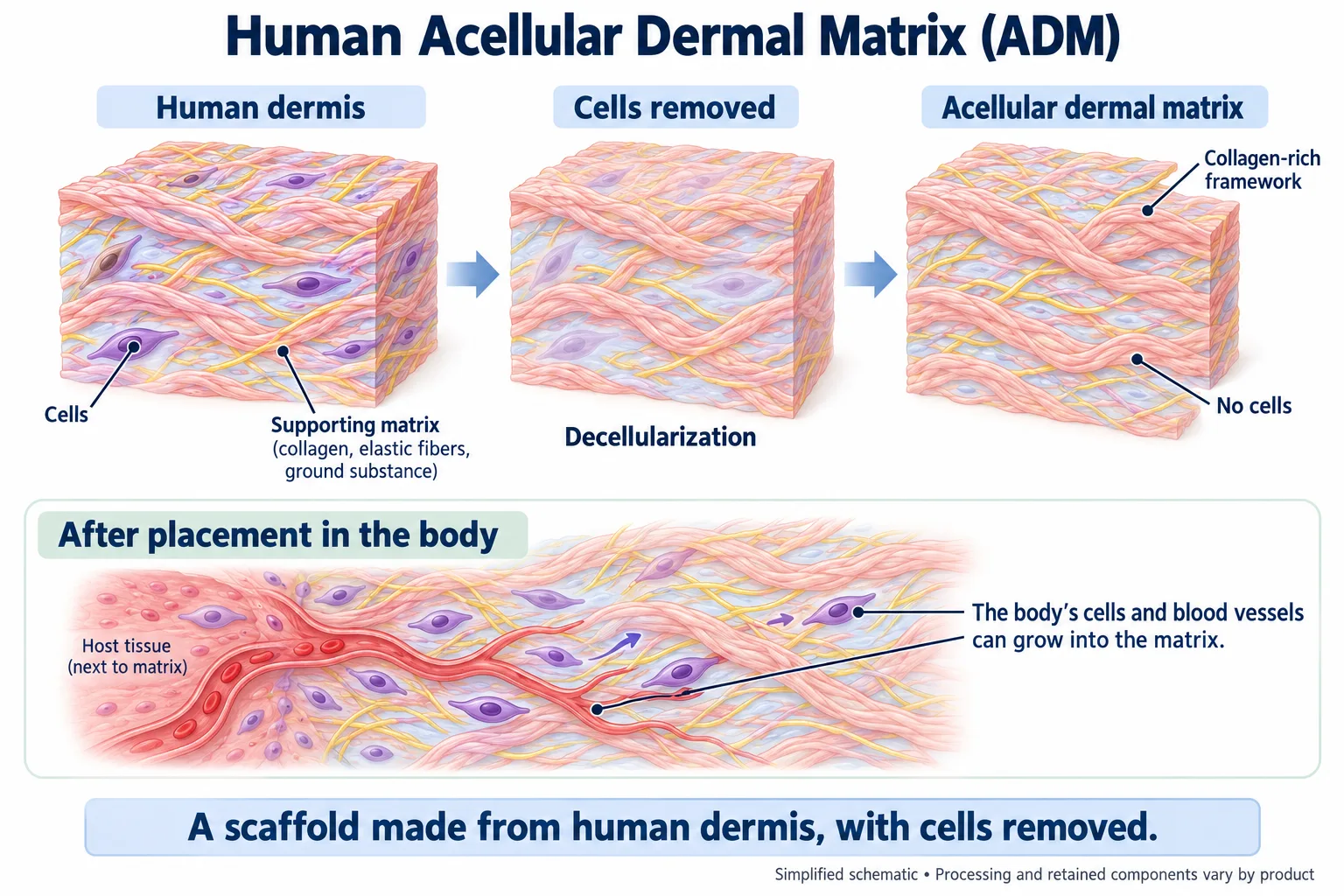
This means CellREDM is different from a live-cell or stem-cell treatment. Its concept centres on processed structural material.
The donor origin should also be explained clearly during consultation, together with product traceability, processing and relevant safety information.
Why Is This Treatment Concept Interesting?
Skin cells and their surrounding matrix have a close relationship. Cells maintain the matrix, while the matrix helps influence how cells attach, move and respond to their environment.
That relationship makes ECM an interesting area for treatment research.
The idea behind introducing processed matrix material is to provide material within the tissue that may support its structure and interaction with cells.
However, there is still a step between a promising biological idea and a visible cosmetic improvement.
We need to understand what happens after treatment: how the material behaves, how the tissue responds and whether patients notice a worthwhile change.
What Should You Take Away From This?
You do not need to remember every scientific term.
The useful part is understanding that collagen provides support, elastin contributes spring, and GAGs help hold water. Together, they form part of the environment surrounding your skin cells.
CellREDM draws on this matrix-based concept. Whether it is suitable for you depends on your skin concerns, medical history and the evidence supporting the proposed treatment.

During a consultation, start with what you want to improve—dryness, roughness, fine lines or reduced bounce. Then ask what change is realistic, what risks are involved and how the results will be assessed.