
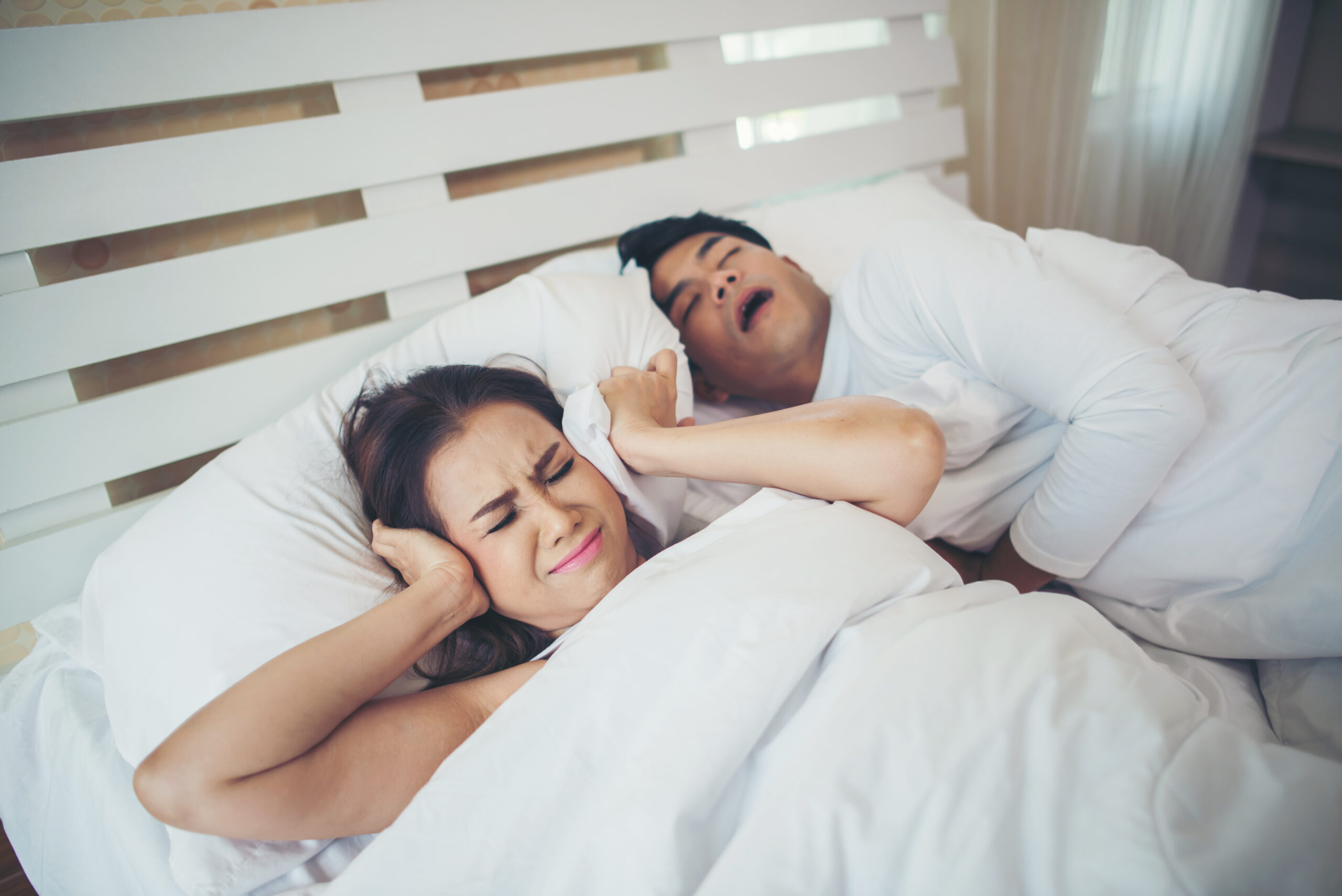
Why Do I Snore Every Night?
Your partner nudging you at 3AM… again? Sometimes your snoring gets so loud that everyone else stays awake, yet you remain completely unaware because you’re fast asleep.Snoring doesn’t just disturb the person next to you – it may also be your body trying to tell you “something”.Occasional mild snoring is usually harmless. However, frequent, loud snoring or waking up tired despite enough sleep may indicate a more serious condition such as Obstructive Sleep Apnea.
What Is Snoring and Why Does It Happen?
Snoring is the sound made during sleep when airflow is partially blocked or narrowed in the airway, causing throat tissues to vibrate.
Men tend to snore more often due to airway structure, and the risk increases with age as muscles relax. However, women can also snore, especially due to weight gain, pregnancy, or hormonal changes.
What Causes Loud Snoring During Sleep?
Snoring may also be linked to the following factors:
Nasal blockage
Blocked nose from allergies, sinus issues, flu, or a deviated septum can make breathing harder, forcing mouth breathing during sleep and leading to louder snoring.
Poor sleep posture
Sleeping on your back can cause the tongue and throat tissues to fall backwards, narrowing the airway and triggering snoring.
Weight gain
Excess weight, especially around the neck, can narrow the airway during sleep, making breathing harder and leading to snoring.
Enlarged tonsils
Large tonsils can narrow the throat space, especially when lying down, blocking airflow and causing snoring in both children and adults.
Airway obstruction during sleep
Some people have naturally narrow airways or soft tissues that collapse during sleep, blocking airflow and causing loud, persistent snoring.
Sleep deprivation
Lack of sleep can cause the throat muscles to become overly relaxed once you finally fall asleep. This excessive muscle relaxation increases airway vibration and may worsen snoring.
Ageing and muscle relaxation
As we age, throat muscles become less firm, making the airway more likely to narrow or collapse during sleep, leading to snoring.
Health Risks of Snoring
In some cases, snoring could be a sign that breathing is being disrupted during sleep, such as with Obstructive Sleep Apnea.
That’s why sleep disorder symptoms like these can happen:
Poor sleep and low energy – Even if the person sleeps for 7–8 hours, the body didn’t get enough restorative sleep overnight.
Morning fatigue and snoring – Poor oxygen flow and interrupted sleep can leave a person feeling sleepy, low-energy, or unfocused during the day.
Morning headaches – Reduced oxygen levels during sleep may contribute to headaches after waking up.
Poor sleep quality – Frequent snoring and breathing interruptions prevent the body from entering deep sleep properly.
The Difference Between Snoring & Obstructive Sleep Apnoea (OSA)
Aspect | Simple Snoring | Obstructive Sleep Apnoea (OSA) |
Definition | Noisy breathing during sleep caused by vibration of throat tissues | A serious sleep disorder where breathing repeatedly stops and starts during sleep |
Breathing pattern | Normal breathing, just noisy | Breathing is partially or fully blocked multiple times during sleep |
Airway condition | Partially narrowed airway | Airway collapses or becomes fully blocked |
Oxygen levels | Usually normal | May drop due to interrupted breathing |
Snoring sound | Can be loud but steady | Often loud, irregular, with pauses or choking sounds |
Sleep quality | May be slightly affected | Poor sleep quality due to frequent interruptions |
Night symptoms | Mainly snoring | Snoring + gasping, choking, or pauses in breathing |
Daytime effects | Mild tiredness (if any) | Significant fatigue, sleepiness, poor concentration |
Health risk | Generally low risk | Higher risk; linked to conditions like high blood pressure and heart disease |
Treatment need | Lifestyle changes may help | Often requires medical evaluation and treatment |
Why Proper Medical Assessment Is Important
A medical assessment helps determine whether snoring is harmless or linked to disrupted breathing during sleep. Early evaluation at a snoring clinic in Malaysia also ensures the right treatment is recommended for sleep quality improvement.
How Snoring Affects Your Partner and Daily Life
Here’s a typical relationship between snoring and relationship problems
Disturbed sleep for your partner
Loud snoring can repeatedly wake your partner or prevent them from falling into deep sleep. Over time, this leads to their own sleep deprivation, even if they are not the one snoring.
Strain on relationships
When nights are constantly interrupted, it can create frustration, resentment, or emotional distance. Some couples may even end up sleeping in separate rooms.
Reduced rest and recovery for both
A disrupted sleep environment doesn’t just affect one person – it impacts both partners’ ability to fully rest and recover, leading to shared fatigue and reduced quality of life.
Emotional and communication impact
Poor sleep can make both partners more irritable and less tolerant, which may increase small misunderstandings or conflicts in daily life.
How to Stop Snoring?
Depending on the condition, snoring can often be improved through a combination of approaches:
- Lifestyle modifications
Simple daily changes such as improving sleep habits, maintaining a healthy lifestyle, and avoiding alcohol before bedtime can help reduce snoring.
- Weight management
Maintaining a healthy weight can help reduce pressure around the neck, making it easier to breathe during sleep and improving airflow.
- Sleep habit adjustments
Changing sleep positions (such as avoiding sleeping on your back) can help keep the airway more open during sleep.
- Medical assessment
A proper medical evaluation is important to identify the root cause of snoring and rule out conditions such as Obstructive Sleep Apnea.
- Non-invasive treatment options
For persistent snoring, non-surgical approaches may be recommended to improve airway function and reduce tissue vibration
Non-Surgical Snoring Treatments in Malaysia
Snoring Laser (the modern solution)
If lifestyle changes aren’t enough, snoring laser treatment can be a simple, non-surgical option to consider.
It works by gently tightening the soft tissues in the throat so the airway becomes less likely to collapse during sleep. This helps air flow more smoothly, which can reduce or even stop snoring.
The best part is, it doesn’t involve surgery or long recovery time – you can usually go back to your normal routine right after the treatment.
Improving Sleep Quality Through Professional Assessment at Hebe Clinic
If you’re curious about your snoring, you can simply book a consultation with us to get it checked.
Consultation process
The doctor will ask about your sleep habits, snoring pattern, and any symptoms you or your partner may notice during sleep.
Identifying the root cause of snoring
A basic assessment will help identify what is causing your snoring – whether it’s nasal blockage, airway narrowing, weight-related factors, or other issues.
Personalised treatment recommendations
Based on your condition, you will be advised on suitable options, which may include lifestyle changes, medical advice, or non-invasive treatments to improve breathing during sleep.
Is Your Snoring Affecting Others More Than Before? Time to Seek Treatment?
You may consider seeking snoring treatment in KL if you experience:
Chronic snoring that happens most nights and affects sleep quality
Poor sleep quality, such as waking up tired or unrested
Suspected Obstructive Sleep Apnea, especially if breathing pauses or gasping are noticed during sleep
Impact on partner’s sleep, where loud snoring disturbs or disrupts your partner’s rest
Benefits of Early Treatment for Snoring
✔ Better sleep quality
✔ Improved alertness
✔ Better well-being
✔ Improved quality of life in the long run
How Hebe Clinic, a Snoring Specialist in Kuala Lumpur, Helps with Snoring Concerns
If your snoring is so powerful, even the neighbours know your sleep schedule, it’s time to do something about your snoring.
Consult our doctors to and to understand the possible causes and suitable sleep apnoea treatments in Malaysia:
📞 Contact Us: +6013 911 8712
📍 Hebe Clinic