What Skin Repair Really Means
Skin repair is the process of restoring comfort, strength, moisture balance, and surface smoothness after damage or stress. This may involve recovering from dryness, irritation, sun exposure, acne marks, mild inflammation, or a weakened skin barrier.
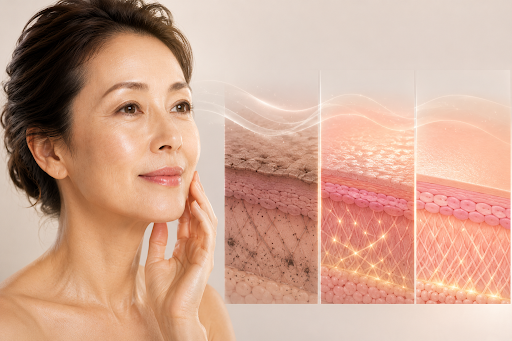
Regeneration, on the other hand, refers to the skin’s natural renewal process. Skin constantly produces new cells and sheds old ones. However, this process can become slower with age, which may make mature skin look dull, rough, or uneven.
Supporting repair does not mean making the skin renew overnight. It means helping the skin function better so recovery becomes smoother and less reactive over time. Skin booster treatments are often discussed in this context because they focus on hydration, skin repair, elasticity, and overall skin quality.
Why Repair Becomes Slower With Age
As skin matures, its natural repair process becomes less efficient. The skin barrier may become weaker, moisture can escape more easily, and collagen support gradually reduces. These changes can affect firmness, texture, hydration, and the way the skin recovers from daily stress.
This slower repair process may appear as:
Skin that still feels dry after moisturising
Redness that takes longer to calm
Rough texture that becomes harder to smooth
Irritation from products that were previously well tolerated
A dull complexion, even with an active skincare routine
This is why mature skin often needs more than stronger products. It needs a supportive environment that helps the barrier recover, keeps moisture in, and allows renewal to happen gradually.
When the skin is calmer and better protected, it is usually more able to respond to skincare, treatments, and long-term repair.
How to Help Mature Skin Repair Better
Mature skin does not usually repair faster by using stronger products. It often repairs better when the skin is calmer, better hydrated, and protected from repeated irritation.
A good repair strategy should focus on removing what slows recovery first, then adding renewal support carefully.
1. Stop Interrupting the Repair Process
One of the biggest reasons mature skin does not seem to recover is that it keeps getting pushed before it has settled. Too many acids, frequent exfoliation, harsh cleansing, and constant product changes can keep the skin in a cycle of reaction.
When this happens, the skin may spend more time defending itself than repairing.
Common habits that may slow repair include:
Using exfoliating acids too often
Scrubbing the skin frequently
Cleansing until the skin feels tight
Layering multiple active ingredients in the same routine
Changing products before the skin has time to adjust
Treating redness, stinging, or flaking as a normal sign of progress
Sometimes, the fastest way to support skin regeneration is to simplify the routine first.
2. Rebuild Hydration and Barrier Support
Hydration is not just a basic skincare step for mature skin. It is part of the repair strategy.
When mature skin is dehydrated, fine lines look sharper, roughness stands out more, and the complexion reflects less light. This can make the skin look older, even when the main issue is moisture loss.
Well-supported skin usually looks:
Smoother
Calmer
More even
Less tight
More comfortable
Less reactive
A gentle cleanser, steady moisturising, and barrier-supportive ingredients can help create a better environment for repair. When the skin barrier is stronger, the skin usually tolerates active ingredients and treatments more comfortably.
3. Keep Inflammation Low
Skin does not need to look severely inflamed to be struggling. Low-grade irritation can still slow visible recovery and make mature skin look dull, dry, and sensitive.
Signs that the skin may be too irritated to repair well include:
Stinging when products are applied
Redness that comes and goes easily
Flaky patches
Tightness after cleansing
Increased sensitivity
A routine that feels active, but the skin still looks tired
When this happens, the priority should be calming the skin before adding more treatment. A lower-stress routine often helps mature skin recover more steadily.
4. Use Retinoids and Renewal Ingredients Carefully
Retinoids can support skin renewal and may help improve texture, fine lines, and overall skin quality over time. However, they work best when the skin barrier is stable enough to tolerate them.
For mature skin, retinoids are usually better introduced slowly.
A more skin-friendly approach may include:
Starting with a lower strength
Using it only a few nights a week at first
Pairing it with moisturiser
Avoiding too many acids or strong actives at the same time
Adjusting based on dryness, redness, or sensitivity
Renewal should not feel like constant peeling. Healthy regeneration is usually gradual. When rough texture, acne marks, or uneven surface concerns are more persistent, treatment plans may also look at options such as Fotona Fractional Laser for texture concerns as part of a more targeted assessment.
5. Protect the Skin While It Repairs
Skin repair becomes harder when the skin is repeatedly exposed to daily stress. Sun exposure, dry air, hot water, harsh cleansers, and friction can all affect recovery.
Protection should include:
Daily sunscreen
Avoiding very hot water on the face
Reducing rubbing or scrubbing
Keeping the skin moisturised in dry environments
Choosing products that feel supportive, not harsh
For mature skin, protection is not separate from regeneration. It is part of what allows repair to happen more effectively.
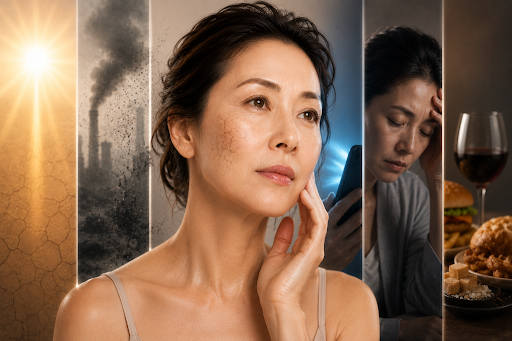
What Usually Slows Repair Down
Sometimes the problem is not that mature skin cannot recover. It is that the routine keeps interrupting recovery.
Common things that slow visible repair include:
Overwashing
Strong exfoliation too often
Using several active ingredients at once
Inconsistent moisturising
Skipping sunscreen
Keeping products in the routine even when the skin is clearly irritated
Skin habit | What it is more likely to do |
Gentle cleansing and regular moisturising | Support barrier repair and reduce dryness |
Daily sunscreen | Protect healing skin from more damage |
Gradual retinoid use | Support renewal over time |
Frequent harsh exfoliation | Increase irritation and weaken the barrier |
Too many active products together | Make mature skin more reactive and slower to settle |
If the skin is always in a cycle of dryness and irritation, it never gets much chance to look restored.
Give Your Skin the Right Support to Recover
When mature skin feels dry, reactive, rough, or slower to bounce back, the answer is not always to add stronger products. Sometimes, the skin needs a clearer repair plan that supports hydration, barrier strength, renewal, and long-term skin quality.
At Hebe Clinic, your skin can be assessed based on its hydration level, sensitivity, texture, pigmentation, and recovery concerns. This helps identify whether your skin may need a simpler home routine, barrier-focused care, skin booster treatments, resurfacing options, or other personalised support.
If your skin keeps feeling irritated, dull, or slow to recover, you can book a consultation with the Hebe Clinic team to understand what may be suitable for your skin.