What Actually Happens to Skin As It Ages?
Skin aging happens in two main ways:
Intrinsic aging, which is the natural aging process over time
Extrinsic aging, which is caused by outside factors such as UV exposure, smoking, pollution, and long-term environmental stress
As skin matures, several changes happen at once:
Collagen and elastin gradually decline
The skin becomes less firm and elastic
Natural oil production reduces
Moisture is lost more easily
Cell turnover slows down
Dead skin cells may remain longer on the surface, making skin look dull or rough
Sun exposure is one of the biggest contributors to premature skin aging. Over time, UV damage can lead to:
Wrinkles
Uneven tone
Rough texture
Pigmentation
Loss of elasticity
This is why aging skin usually cannot be improved by one serum alone. Firmness, texture, and glow are all linked to deeper skin changes.
Can Aging Skin Truly Be Reversed?
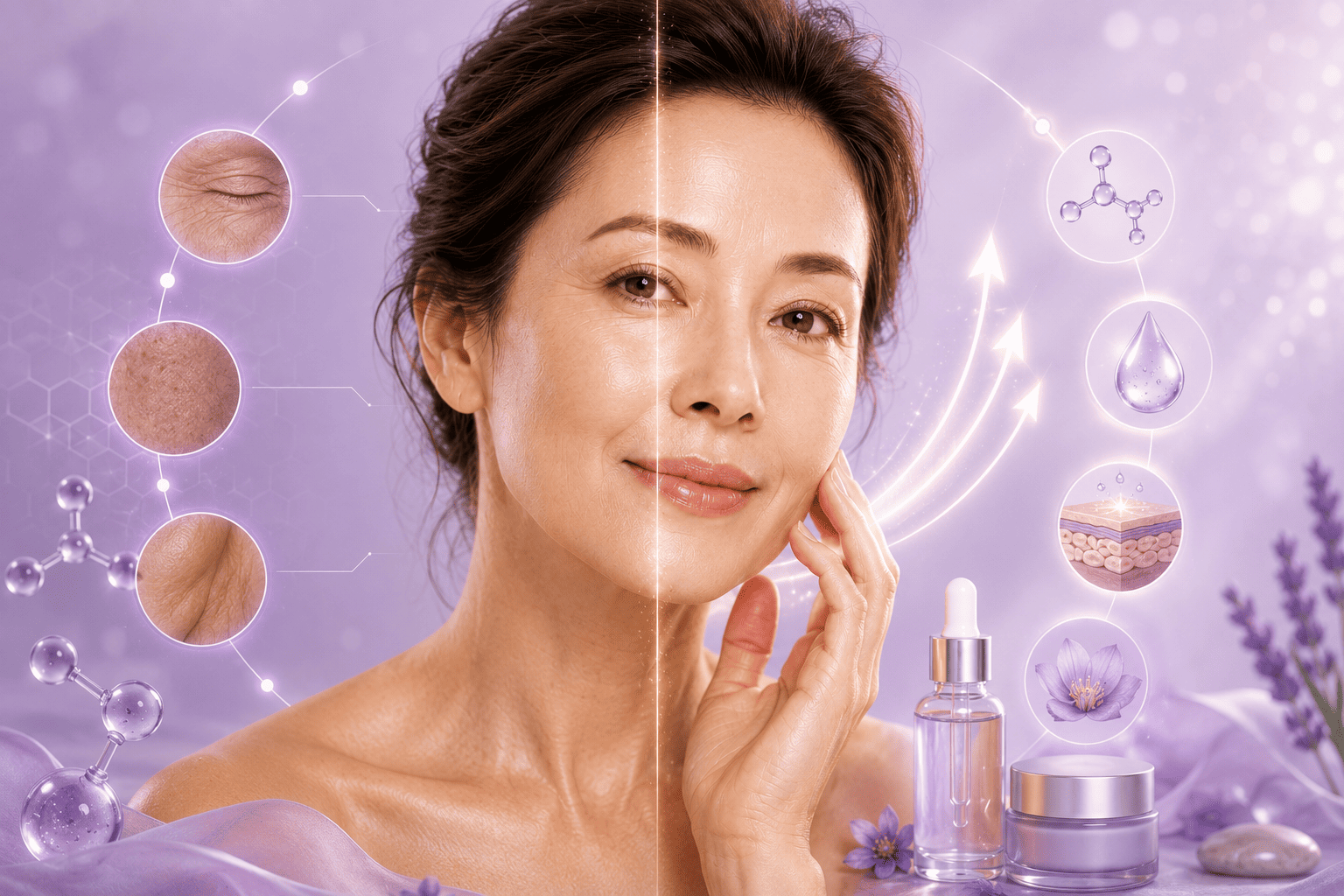
The word “reverse” can be misleading. Skin cannot return to its younger biological state. However, it is possible to improve the appearance of aging skin.
With consistent care, many people can improve:
Dryness and roughness
Fine lines caused by dehydration or early collagen loss
Dullness
Uneven tone
Mild pigmentation irregularities
Skin texture
Overall radiance
Firmness and skin quality over time
This is a more realistic way to think about aging skin. Instead of asking whether the skin can become young again, it is more helpful to ask how the skin can become healthier, stronger, and better supported.
What Helps Firmness, Texture and Glow?
Aging skin usually needs a combination approach. Firmness, texture, and glow are different concerns, but they often overlap.
Skin Concern | Why It Happens | What May Help |
Loss of firmness | Collagen, elastin, and deeper support structures change over time | Sunscreen, retinoids, collagen-supporting treatments such as Sculptra for firmness and skin support, healthy lifestyle habits |
Rough texture | Slower cell turnover, dryness, and sun damage can affect the skin surface | Gentle exfoliation, retinoids, moisturising care, resurfacing treatments such as Fotona Fractional Laser |
Dullness | Dehydration, dead skin buildup, pigmentation, and poor light reflection reduce glow | Hydration, sunscreen, vitamin C, niacinamide, gentle exfoliation |
Fine lines | Dryness, collagen decline, sun exposure, and repeated facial movement contribute | Moisturiser, sunscreen, retinoids, skin-quality treatments when suitable |
Pigmentation | UV exposure, inflammation, hormonal factors, and age spots may contribute | Sunscreen, brightening ingredients, pigment-focused treatments |
Dryness | Mature skin may produce less oil and retain less water | Mild cleanser, moisturiser, glycerin, hyaluronic acid, ceramides |
How Long Does It Take to See Visible Improvement?
Skin improvement takes time, especially for concerns like texture, pigmentation, firmness, and overall glow.
A realistic timeline may look like this:
Hydration may make the skin look fresher within days
Rough texture may improve gradually over several weeks
Retinoids often need a few months of regular use before visible changes become clearer
Pigmentation may take longer, especially if sun exposure continues
Firmness usually improves more slowly because collagen support takes time
This is why consistency matters. A simple routine used regularly will usually support aging skin better than short bursts of aggressive skincare.
What Usually Makes Aging Skin Look Worse?
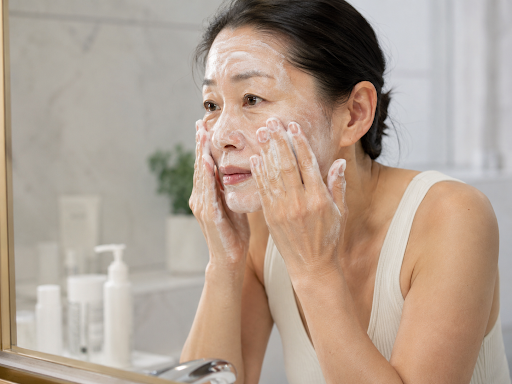
Trying to reverse aging skin with too many strong products can often do more harm than good. Mature skin may become more sensitive over time, so harsh or overloaded routines can leave the skin red, flaky, tight, or dull.
Common habits that may make aging skin look worse include:
Over-cleansing the face
Scrubbing the skin too frequently
Layering multiple active ingredients at once
Using strong exfoliating acids too often
Applying retinoids too frequently before the skin has adjusted
Changing skincare products too quickly
Ignoring dryness, redness, flaking, or tightness
When the skin barrier is weakened, fine lines, rough texture, and uneven tone may become more noticeable.
When Should You Seek Professional Advice?
A professional skin consultation may be helpful if:
Your skin looks dull despite consistent skincare
Pigmentation keeps returning
Fine lines or rough texture are becoming more noticeable
Your skin feels dry, reactive, or easily irritated
You are unsure whether skincare alone is enough
You want natural-looking improvement without overdoing treatment
A dark spot changes in size, shape, colour, or texture
A proper assessment can help identify whether the main issue is dryness, pigmentation, texture, collagen loss, sensitivity, or a combination of factors.
Book Your Personalised Skin Assessment
Aging skin can involve dryness, texture changes, pigmentation, collagen loss, slower repair, or several concerns at once. This is why the most suitable plan depends on what is actually affecting your skin, not only on which product or treatment sounds popular.
At Hebe Clinic, your skin can be assessed based on tone, texture, hydration, sensitivity, firmness, and ageing-related changes. From there, the team can guide you on whether your concern is more related to skincare, skin-quality support, resurfacing, collagen stimulation, or a more personalised treatment plan.
If you are unsure where to begin, you can book your personalised skin assessment with Hebe Clinic and find out what may be suitable for your skin condition.